
The dollar got a lift from elevated U.S. Treasury yields on Thursday as investors wagered the Federal Reserve would hike rates this year, while global focus moved to a two-day summit between U.S. President Donald Trump and China’s Xi Jinping.
Xi told Trump that trade talks were making progress but warned that disagreement over Taiwan could send relations down a dangerous path, framing a high-stakes meeting Trump called possibly the “biggest summit ever”.
As the summit got underway, China’s onshore yuan clung to the three-year top of 6.7840 per dollar it hit earlier in the session. Its offshore counterpart similarly touched its strongest level in more than three years at 6.7817 per dollar.
Analysts at Barclays said they expect the yuan to hold steady in the near term, which would “also help ease the path of discussions between the U.S. and China”.
“However, pushback by the authorities, via fixings and intervention, suggests limited patience with rapid appreciation,” they added.
Traders had pushed the currency higher ahead of the meeting, anticipating deals between the world’s two largest economies.
In the broader market, the dollar held steady on Thursday, leaving the euro little changed at $1.1714 and on track to lose 0.6% for the week, which would mark its largest decline in two months.
Sterling last bought $1.3524 and was headed for a weekly fall of roughly 0.8%, pressured in part by political turmoil at home.
Against a basket of currencies, the U.S. dollar was last at 98.48, up more than 0.6% for the week thus far.
It reversed early gains against the yen to trade a touch lower at 157.87, with the Japanese currency drawing support from comments by Bank of Japan board member Kazuyuki Masu, who said the central bank should move to raise interest rates promptly if there are no clear signs of an economic slowdown.
HOT INFLATION NUMBERS
The greenback has been buoyed by signs of renewed domestic inflationary pressures, with data on Wednesday showing that U.S. producer prices posted their biggest increase in four years in April.
That came on the heels of Tuesday’s figures which showed another solid increase in consumer prices last month, resulting in the annual inflation rate advancing at its fastest pace in three years.
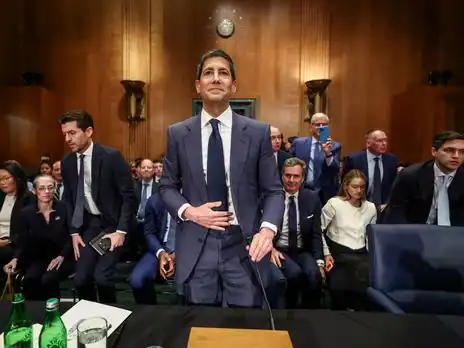
“The inflation data we received this week certainly won’t be welcomed by FOMC officials, including incoming Fed Chair Kevin Warsh,” said Carol Kong, a currency strategist at Commonwealth Bank of Australia.
The U.S. Senate on Wednesday approved Warsh as Fed Chair, putting the 56-year-old lawyer and financier at the helm of the U.S. central bank.
“We forecast that the FOMC will have to start a tightening cycle from December this year, and we forecast three hikes in the cycle for now,” said Kong.
Markets are now pricing in a 31.8% chance that the Fed will raise rates in December, up from just over a 16% chance a week ago, according to the CME FedWatch tool.
The change in rate expectations and fears of a surge in inflation have sent U.S. Treasury yields higher, with longer-dated yields reaching their highest levels since mid-2025 overnight.
The two-year yield was last at 3.9773%, holding near Wednesday’s 1-1/2-month top, while the benchmark 10-year yield stood at 4.4669%, having touched close to a one-year high in the previous session.
In other currencies, the Australian dollar flirted with a four-year peak and last bought $0.7255, underpinned by hawkish rate expectations at home.
The New Zealand dollar eased 0.06% to $0.5932.
