
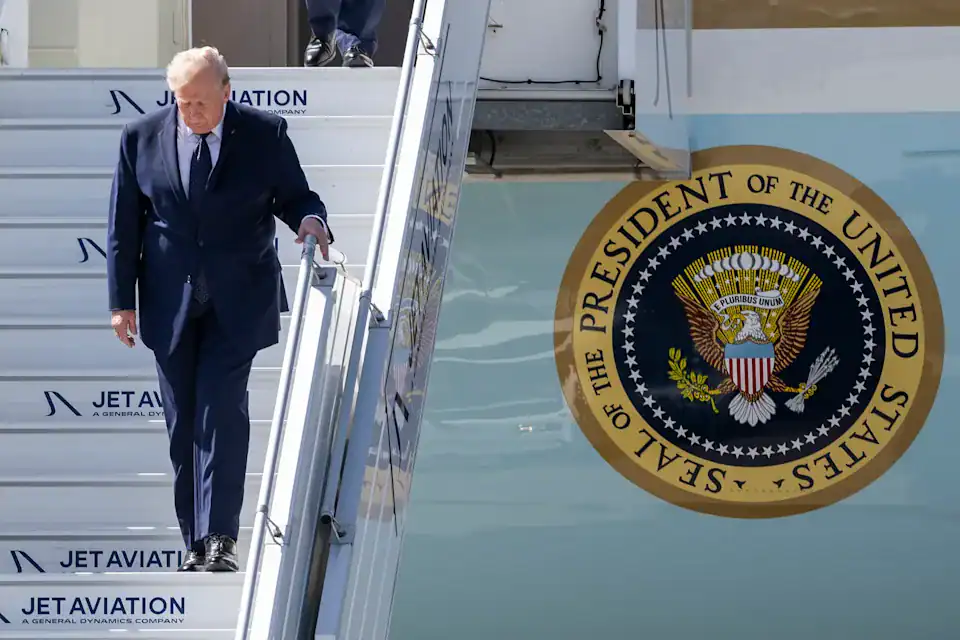
The announcement of a peace deal with Iran has buoyed energy markets despite President Trump and Iranian officials making conflicting claims about future shipping tolls in the Strait of Hormuz.
Both sides are in agreement that a final deal will see “the toll-free opening of the Strait of Hormuz,” as President Trump put it Sunday.
That is a clear positive for consumers facing high gas prices as well as oil companies looking to refill their inventories. The agreement is scheduled to take effect Friday as a 60-day window for nuclear talks kicks off.
What happens after those two months is where things become uncertain.
Iran has confirmed that it will not immediately attempt to collect tolls, but the country’s semi-official state media Tasnim News Agency has also reported that a last-minute addition to the deal ensures joint Iranian and Omani “administration of maritime navigation services” in the strait.
The report said Iran would hold off on fees for 60 days but would “begin charging ships for services after that period.”
That comes as Iran, alongside Oman, has been making concrete plans to control shipping traffic in the crucial waterway. The two nations have held at least one call in recent weeks on the topic, and Iran has even gone so far as to set up a “Persian Gulf Strait Authority.”
President Trump has long said his bottom line is that the crucial waterway needs to be opened permanently without tolls, a position he reaffirmed Sunday in an interview with the New York Times.
Trump said the agreement will mean the waterway will ultimately be “permanently toll-free.” A senior US official added to reporters Monday that “we’re quite explicit in [the text of the deal] that the straits will be open toll-free for 60 days and we expect that to become part of the final agreement as well.”
This disagreement could become a major flash point in the months ahead and is just one of an array of more difficult issues between the two nations apparently being put off until later.
The mixed signals are leading few forecasters to project full navigation through the strait anytime soon.
“A reopening will probably result in tankers still trapped in the Gulf exiting the Strait as soon as possible,” Capitol Economics wrote in an analysis. “But it is unclear how quickly tankers will enter the Strait of Hormuz to collect oil and [liquid natural gas].”
Oxford Economics added that this “agreement isn’t yet a gamechanger for the global outlook.”
Also on Monday, another senior US official offered a prediction to reporters that overall shipping traffic through the strait “will return to normal pretty quickly, definitely within 30 days, once they can get rid of all the mines.”
A move toward ‘technical negotiations’
The actual text of the accord has not yet been released as the Trump administration promises the full text will eventually be public. But for now the conflicting accounts from each side have led even some Trump allies to raise alarms.
“I am somewhat concerned that Iran’s view of the agreement seems different than what the American negotiating team is claiming,” Sen. Lindsey Graham of South Carolina posted late Sunday. “Time will tell.”
What the deal lays out as next steps, according to a senior Trump administration official, is a 60-day window for additional talks described as a “technical negotiations” focused on Iran’s nuclear program.
The Trump administration says the plan is for the material to be destroyed on-site and then removed from the country.
Iran has made no such public commitments on that issue. Iran’s Prime Minister described this week’s deal only as laying “the foundation for the technical talks.”
