
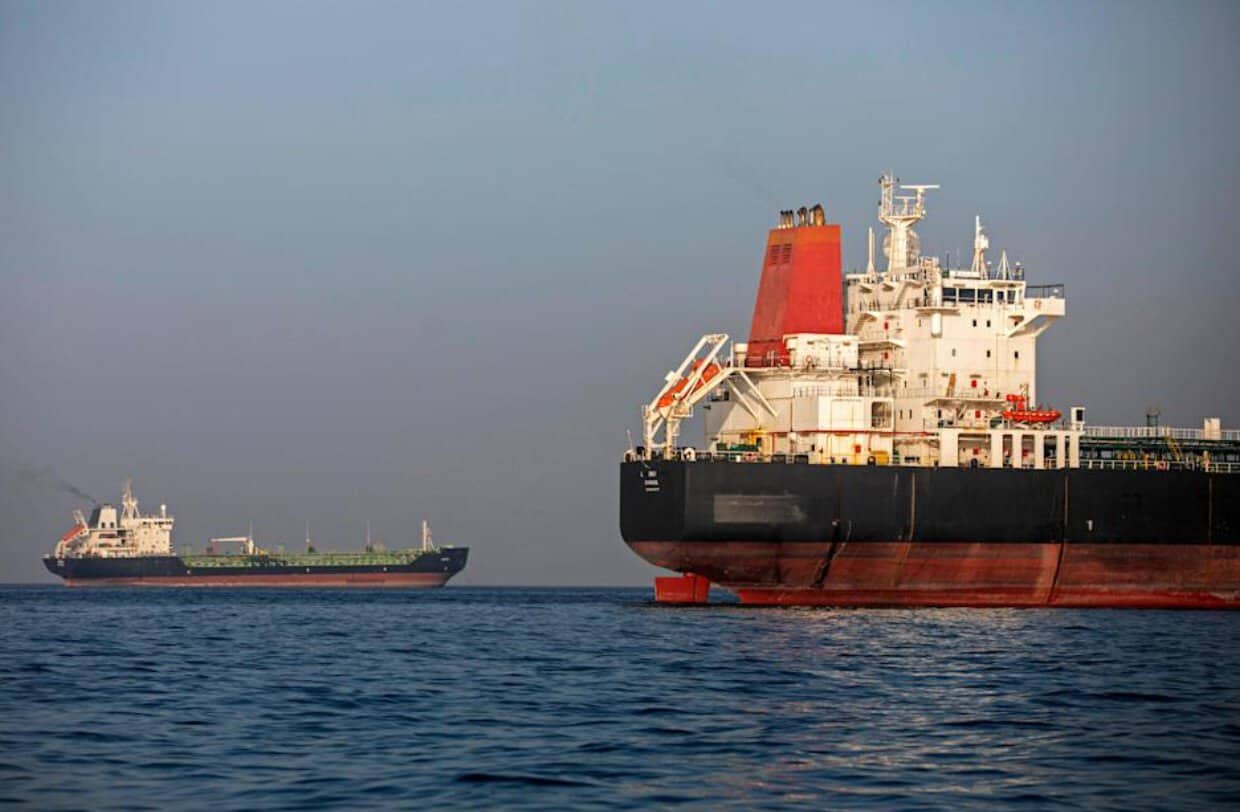
A deal between the US and Iran that includes reopening the Strait of Hormuz has been making progress, but energy analysts warn that global energy markets will take time to normalize.
Translation: Don’t expect quick relief at the gas pump even if a deal gets over the finish line.
The warnings have been legion as shippers face an immediate-term challenge of moving an estimated 1,500 ships currently in the Persian Gulf and tally up the damage to energy infrastructure across the region.
Wolfe Research wrote that “the process of rebuilding commercial and strategic inventories will stretch well into 2027.” Henrietta Treyz of AGF Investments echoed the point and termed it “the Hormuz Hangover,” suggesting a timeline “measured in quarters and years.”
Capital Economics added things up for investors in its own analysis that any market rally that surrounds a strait reopening is likely to be limited, in large part because “energy prices won’t immediately return to normal.”
But those warnings come in stark contrast to rhetoric from the Trump White House, which has already begun to tout how a deal may lead to quick relief.
In a Fox Business appearance on Tuesday, National Economic Council director Kevin Hassett promised that “as soon as the straits are open, then energy prices are going to plummet like nothing you’ve ever seen before.”
He said over the weekend on CBS that a deal could “refill [global] refineries almost right away,” offering a timeline of “between a month and two months.”
Trump himself has been promising since the war began that prices at the pump will “drop like a rock” when hostilities end. The president lashed out over the weekend at criticism of the emerging framework, saying his critics “know nothing about the potential deal I am making with Iran.”
The parameters of the deal include a 30- or 60-day extension of the ceasefire during which the Strait of Hormuz would be reopened, according to multiple reports. Iran would also be able to sell oil, and negotiations on its nuclear program would be pushed to a later date.
Market analysts have suggested this framework could be a positive for markets overall.
“In this ‘skinny’ deal, the thorniest issues are punted to later stages [and] we expect markets won’t care one bit about the deferral of the nuclear file,” Tobin Marcus of Wolfe Research wrote.
“If the Strait opens, that’s good enough.”
An uncertain timeline for any deal announcement
The near-term timeline for any deal announcement, meanwhile, has become increasingly uncertain.
Trump posted on Saturday that a deal “will be announced shortly,” before follow-up messages from the president acknowledged that talks would take additional time and may not pan out.
US Secretary of State Marco Rubio told reporters early Tuesday that any deal will “take a few days” as new clashes between US and Iranian forces erupted around the Strait of Hormuz itself.
Those new clashes could provide an additional worry for already skittish shippers because the US strikes were conducted in part to counteract “Iranian boats attempting to emplace mines,” according to a statement from US Central Command.
For the moment, crude oil prices are volatile as the talks continue. Futures of international benchmark Brent (BZ=F) crude and US benchmark West Texas Intermediate (CL=F) were hovering between $90 and $100 per barrel on Tuesday morning.
Also this week, analysts warned that even a deal that opens the strait to a free flow of traffic could lead to something far from normalization.
In addition to the physical damage to energy facilities in the region, Treyz wrote that the new reality carries “lingering, existential ramifications” because Iran could move to close the strait anytime.
“Investors can’t unsee Iran’s not‑so‑subtle threats,” Edward Yardeni of Yardeni Research wrote.
Even after the war ends, he added, “stock markets are likely to bake a Strait of Hormuz premium into oil for the next time Iran flexes its leverage.”
