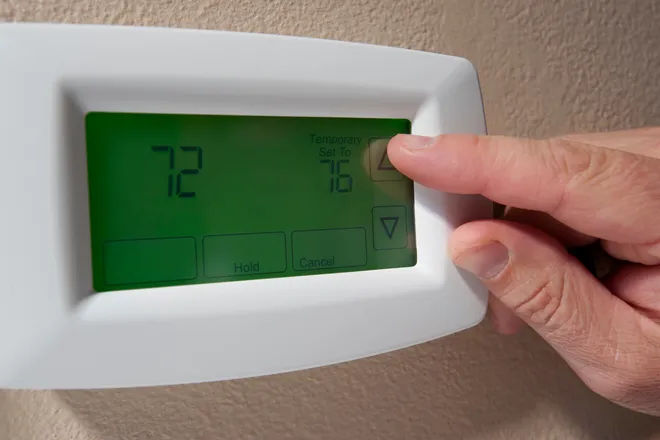
“A home that’s at 70 degrees is quite comfortable,” Narayanamurthy said.
Don’t set your thermostat too low
Penny-pinchers might be tempted to set their thermostat at bracing levels and survive the winter by bundling up in layers or piling on blankets.
Though you’d have to set your home at a pretty low temperature for it to become a health risk, Narayanamurthy said, going below 60 degrees is not a good idea.
“You have to keep it really low to really get into a health concern,” he said. “What you want to do is keep it at a reasonable temperature that’s not chilly.”
The World Health Organization recommends keeping indoor temperatures between 64 and 75 degrees for healthy people. But for those who are very young, elderly or who have health problems, the minimum temperature shouldn’t dip below 68, the organization says.
Space heaters can help, but use with caution
Many homeowners might be tempted to rely on fireplaces, space heaters, electric blankets and wood-burning stoves to keep warm in the winter.
According to Direct Energy, these types of secondary heating sources can help slash costs, because they offer heating to a more targeted area of your home at a fraction of the cost of cranking up the thermostat.
But many of these options come with their own safety risks and similarly require routine maintenance, care and even replacement.
Once a fire hazard, modern electric space heaters are much safer than they used to be. They have built-in safety features that turn the heaters off if they tip over, overheat or have been left turned on for too long.
How to save on heating bills
Experts offer a variety of other tips that, altogether, could cut down on your bills and ensure your heating unit is working at maximum efficiency.
- Have your heating unit inspected annually. A heating system that’s running efficiently saves money. That means the cost for a professional to come to your home and inspect your unit (anywhere from $150 to $500, Consumer Reports estimates) can pay off in the long run.
- Consider investing in a “smart” thermostat. Because many can connect to smartphones via mobile apps, smart thermostats allow homeowners to program their thermostats while they’re away or even set a schedule. For that reason, the average Energy Star-certified smart thermostat can save about 8% of a homeowner’s annual heating and cooling bills, according to Consumer Reports.
- Check for tax incentives and rebates. Available rebates and tax credits through the Energy Department might help pay for energy-efficient products and replace heating systems that are 15 years old or older. Funding is available for all kinds of other upgrades as well, such as doors, windows and insulation. More information is available at energysaver.gov.
Lower the temperature when sleeping, away from home
The Energy Department says that to save even more energy, people can lower the temperature in their homes when they are asleep or away. Changing the temperature by 7 to 10 degrees for eight hours a day, in winter and summer, can save about 10% a year on heating and cooling, the department said. This step to save money and energy is recommended when the forecast is moderate.
Here are some other tips from the department:
- Take advantage of the heat from the sun. Opening the curtains on south-facing windows during the day will allow sunlight to heat your home naturally. Closing the curtains at night will then block the chill from cold windows.
- Cover drafty windows. There are a couple of ways to go about this. You can use a heavy-duty clear plastic sheet on a frame, or tape clear plastic film, to go tightly on the inside of windows. You can also use snug-fitting, insulating shades or drapes. The department’s website provides information on other energy-efficient window treatments and coverings.
- Lower water heating costs. By keeping the water heater on the warm setting (120℉), you can save energy and avoid scalding. More tips for water heating can be found on the department’s website.
- Lower holiday lighting costs. Using light-emitting diode, or LED, holiday light strings will reduce the cost of decorating homes. Look for manufacturers and brands of ENERGY STAR® certified decorative light strings.