
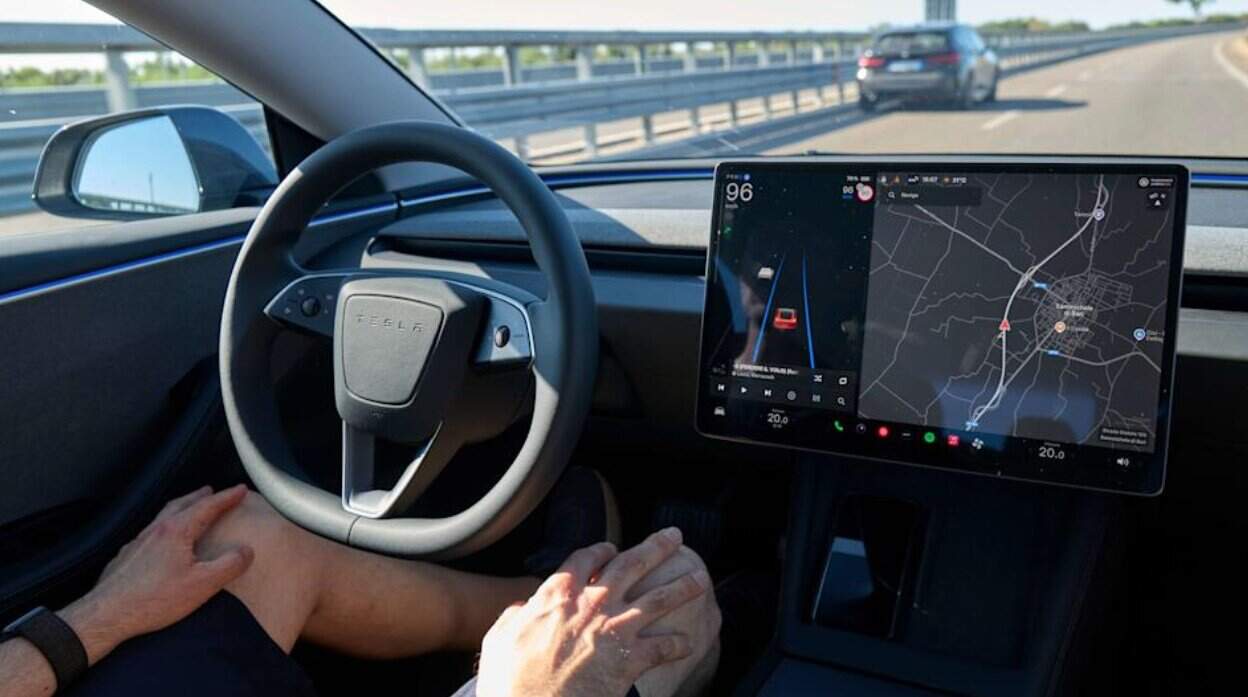
Tesla (TSLA) overcame a big hurdle in the European Union, with the Netherlands becoming the first EU country to approve its Full Self-Driving (FSD) software. The approval could be an opening to get its crucial growth product in the hands of more customers on the continent.
“FSD Supervised has been approved in the Netherlands & will begin rolling out in the country shortly,” Tesla said in a post on X late on Friday, which was first noted by Reuters.
The Dutch motor authority RDW confirmed signing off on FSD.
“RDW has issued a type approval for Tesla’s driver assistance system, FSD Supervised,” the agency said, adding that FSD “has been extensively examined and tested for more than one and a half years on our test track and on public roads.”
RDW noted that Tesla is not the first automaker to get approval for this type of system; BMW (BMW.DE) and Ford (F) have also received approval for supervised self-driving software like FSD.
Under the terms of the approval, Tesla drivers in the Netherlands can take their hands off the wheel in appropriate conditions. However, they must remain fully attentive and ready to intervene at any moment — phone use and reading are prohibited while the system is engaged.
Per Tesla’s Dutch website, FSD Supervised is priced at 99 euros per month, similar to US pricing, or via an outright purchase option of 7,500 euros. In the US, Tesla no longer allows buyers to purchase FSD outright; it’s now available only as a subscription.
The Netherlands’ green light is expected to open the door across Europe, though not without possible complications. RDW said it can submit an application for permission across the EU via the European Commission, but all member states must vote on the application, and approval requires a majority of votes in the committee.
Nevertheless, the positive Dutch development is a boost to Tesla’s autonomy push beyond the US, just as Wall Street is increasingly bullish on the company’s self-driving trajectory.
Last month, Bank of America analyst Alexander Perry reinstated Tesla with a Buy rating and $460 price target. “We view [Tesla] as the current leader in consumer autonomy,” Perry wrote, predicting the company would “quickly become a leader in robotaxi services, given its ability to scale more profitably than competitors.”
Perry’s thesis rests partly on Tesla’s cost advantage. While rivals like Waymo rely on expensive LiDAR-laden sensor arrays — BofA estimates a Waymo robotaxi costs roughly $150,000 to build — Tesla’s vision-only approach brings that figure down to around $40,000 for a Model Y.
That gap becomes even more significant as Tesla looks to scale its robotaxi service, which launched in Austin last June and is expanding to seven additional US metro areas this year.
While the expansion has not yet occurred, and only a few vehicles in Austin are unsupervised, investors will eagerly await more information on Tesla’s autonomy and AI-related efforts when the company releases Q1 earnings on April 22.
