
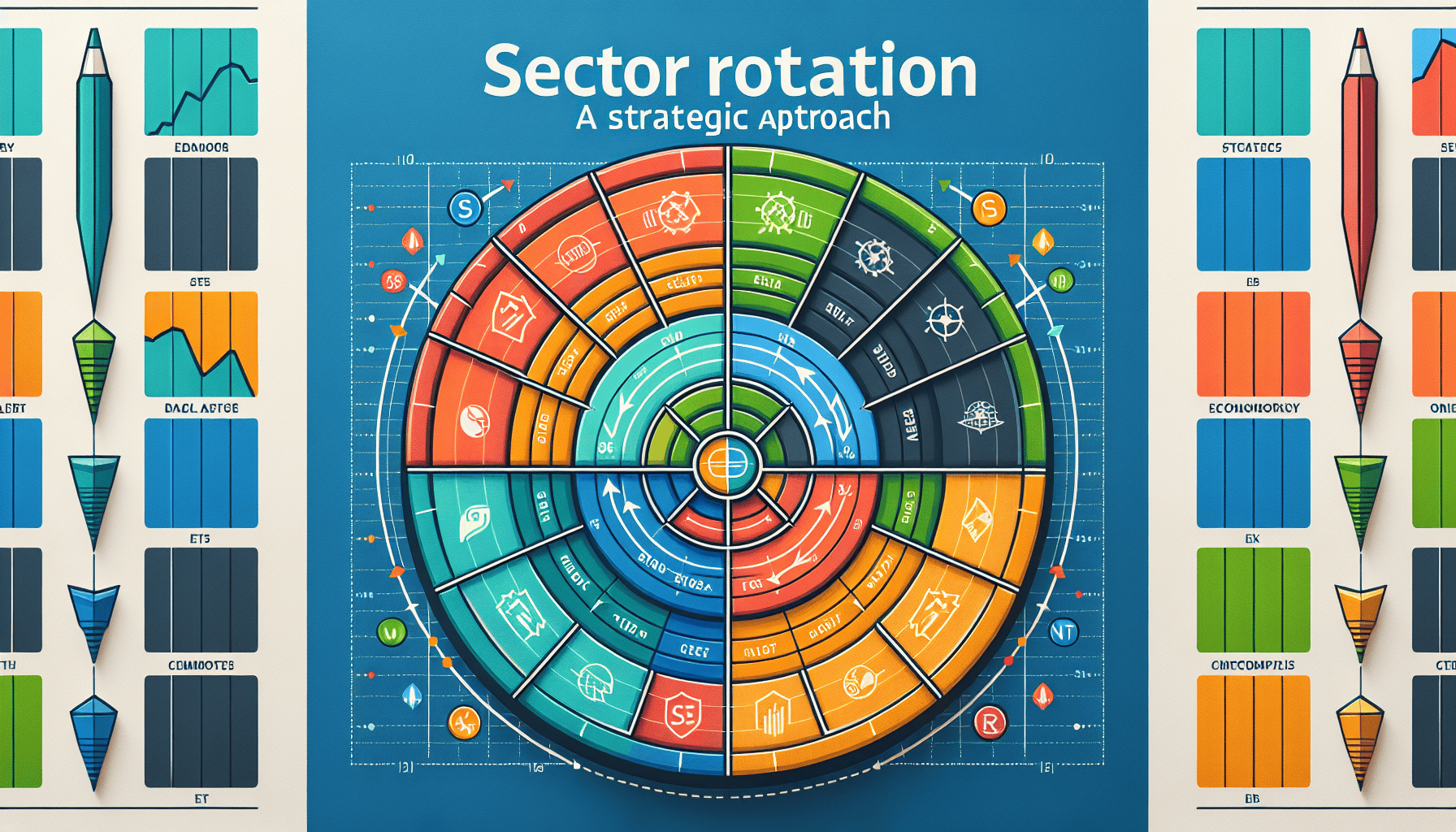
The most successful investors understand that markets don’t move in straight lines, and neither do individual sectors within those markets. While some investors chase yesterday’s winners or stick rigidly to a single investment strategy, sophisticated market participants employ sector rotation to systematically capitalize on the natural ebb and flow of economic cycles. This strategic approach involves shifting portfolio allocations between different industry sectors based on where each sector stands within the broader economic cycle.
Sector rotation operates on the fundamental principle that different industries perform optimally at different stages of economic expansion and contraction. When the economy begins recovering from a recession, cyclical sectors like technology, consumer discretionary, and industrials typically lead the charge as businesses invest in growth and consumers increase spending on non-essential items. As the expansion matures, defensive sectors such as utilities, healthcare, and consumer staples often provide more stable returns when growth slows and uncertainty increases.
The beauty of sector rotation lies in its systematic approach to market timing without attempting to predict short-term price movements. Instead of guessing whether individual stocks will rise or fall, investors focus on identifying which sectors are positioned to benefit from current and anticipated economic conditions. This macro-level perspective helps investors stay ahead of market trends rather than simply reacting to them after opportunities have already passed.
Understanding the typical sector rotation pattern requires familiarity with the four main phases of the economic cycle. During the recovery phase, when economic growth accelerates from recession lows, technology and financial stocks often outperform as companies invest in innovation and lending activity increases. The expansion phase sees continued strength in cyclical sectors, with industrials and materials benefiting from increased business investment and infrastructure spending. As the cycle peaks and growth begins to slow, investors typically rotate toward more defensive positions in healthcare, utilities, and consumer staples that provide steady dividends and stable earnings regardless of economic conditions. Finally, during recession phases, bonds and defensive sectors generally offer the best protection against market volatility.
Successful sector rotation requires more than just understanding economic theory—it demands careful analysis of leading economic indicators and market signals. Employment data, manufacturing indices, yield curve movements, and consumer confidence surveys all provide valuable insights into where the economy stands within the current cycle. Corporate earnings trends across different sectors can reveal which industries are experiencing improving or deteriorating fundamentals, while relative sector performance charts help identify rotation patterns already underway.
Modern investors have numerous tools at their disposal to implement sector rotation strategies effectively. Exchange-traded funds focused on specific sectors provide easy access to diversified exposure within targeted industries without requiring extensive individual stock research. These sector-specific ETFs allow investors to gain broad exposure to technology, healthcare, energy, financials, and other major sectors with single transactions. Additionally, many robo-advisors and investment platforms now offer automated sector rotation models that adjust allocations based on predefined economic indicators and market signals.
Risk management remains crucial when implementing sector rotation strategies, as timing the market perfectly is impossible even for professional investors. Successful practitioners typically employ gradual allocation shifts rather than making dramatic all-or-nothing bets on single sectors. This approach helps smooth out the inevitable timing errors while still capturing the majority of sector rotation benefits. Diversification across multiple sectors, even when emphasizing those expected to outperform, provides additional protection against unexpected sector-specific disruptions.
The global nature of modern markets adds complexity to traditional sector rotation approaches, as international factors increasingly influence domestic sector performance. Energy sector performance, for example, depends heavily on global supply and demand dynamics, geopolitical events, and currency movements that extend far beyond domestic economic cycles. Similarly, technology sector performance often reflects global innovation trends, supply chain dynamics, and international trade relationships that may not align perfectly with domestic economic phases.
Data from recent market cycles demonstrates both the potential and the challenges of sector rotation strategies. Investors who successfully identified the shift from growth to value sectors during certain periods achieved significant outperformance, while those who mistimed rotations or held positions too long often gave back gains. The key insight is that sector rotation works best as a disciplined, systematic approach rather than an emotional reaction to short-term market movements.
As markets continue evolving and new sectors emerge, the principles underlying successful sector rotation remain constant: understanding economic cycles, monitoring leading indicators, managing risk through diversification, and maintaining the discipline to adjust allocations based on changing conditions rather than short-term performance. Investors who master these fundamentals position themselves to benefit from the natural rhythm of market cycles while avoiding the common pitfalls of trend-chasing and market timing. The most effective sector rotation strategies combine systematic analysis with tactical flexibility, allowing investors to adapt their approach as market conditions change while maintaining focus on long-term wealth building objectives.
