
(Bloomberg) — Federal Reserve officials — including two who will become voters in 2026 — offered strongly opposing views Friday on what to do with interest rates, continuing a debate that will grip the US central bank into the new year.
Three policymakers focused in their comments on inflation risks, though one of them suggested he was advocating only a temporary pause to rate cuts to confirm inflation is subsiding. Two more emphasized risks to the labor market instead.
The remarks were the first since Wednesday, when the Fed cut its benchmark rate by a quarter percentage point for a third consecutive meeting in response to rising unemployment. Dissenting votes against the decision indicated the string of cuts has become increasingly contentious amid lingering inflation, and projections showed the median official only expects one reduction in 2026.
“Part of the committee would prefer to be more cautious. They want to see more data on inflation, more data on the labor market,” said Marco Casiraghi, a senior economist at Evercore ISI. With a new Fed chair coming in and expected to push for lower rates, “it’s going to be a bit of a bargaining process over how many cuts might be reasonable in 2026,” he said.
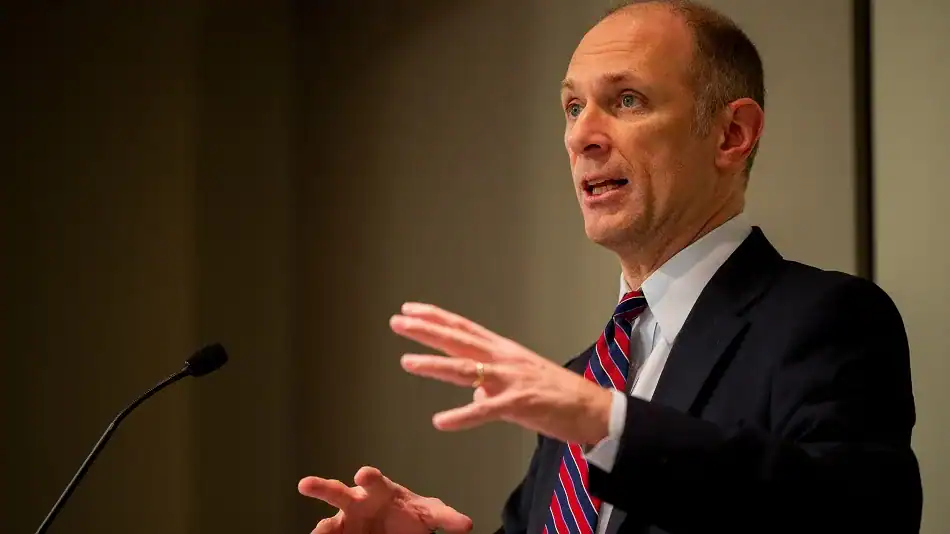
Two officials — Chicago Fed President Austan Goolsbee and his Kansas City counterpart, Jeff Schmid — issued statements Friday outlining the rationale for their dissents against Wednesday’s rate cut. It was Goolsbee’s first dissenting vote since joining the Fed in 2023, while Schmid’s followed a dissent against the previous rate reduction in October.
The Chicago Fed chief said in his statement he “felt the more prudent course would have been to wait for more information” before cutting rates again after a government shutdown delayed several key economic reports in October and November, given some “concerning” data on inflation prior to the shutdown.
Speaking later in the morning on CNBC, Goolsbee added that he projected more rate cuts in 2026 than most of his colleagues: “I’m one of the most optimistic folks about how rates can go down in the coming year,” he said.
Schmid was less equivocal.
“Inflation remains too high, the economy shows continued momentum and the labor market — though cooling — remains largely in balance,” he said in his statement. “I view the current stance of monetary policy as being only modestly, if at all, restrictive.”
Voting Ranks
The Chicago and Kansas City Fed presidents will rotate off the Fed’s voting panel in 2026. Two of their incoming replacements also spoke Friday — one emphasizing concerns about inflation and the other warning of risks to the labor market.
Cleveland Fed President Beth Hammack, at an event in Cincinnati, said the central bank should keep rates high enough to continue putting downward pressure on inflation.
“Right now, we’ve got policy that’s right around neutral,” she said. “I would prefer to be on a slightly more restrictive stance.”
In projections published Wednesday alongside the rate decision, six of 19 policymakers indicated they would have left the benchmark rate where it was before this week’s cut to close out 2025.
Since only 12 of the 19 vote on the rate-setting Federal Open Market Committee each year, and only two of the 12 with votes dissented in favor of higher rates, some analysts dubbed the plethora of elevated rate projections “silent dissents.”
Philadelphia Fed President Anna Paulson, who with Hammack will rotate into the FOMC’s voting ranks next year, was one of two officials speaking Friday who emphasized ongoing risks to the labor market despite the central bank’s recent efforts to adjust rates toward a more neutral setting.
“On net, I am still a little more concerned about labor market weakness than about upside risks to inflation,” Paulson said Friday at an event hosted by the Delaware State Chamber of Commerce. “That’s partly because I see a decent chance that inflation will come down as we go through next year.”
Meanwhile Mary Daly, the San Francisco Fed president, said in a LinkedIn post that she supported this week’s rate cut on the grounds that a stronger labor market would help Americans make up lost purchasing power through rising wages.
“The FOMC must continue to bring inflation down. Anything other than 2% is not an option. But it matters how you get there,” Daly, who does not vote on policy this year or next, said. “Holding policy too tight can cause undue harm to American families and leave them with two problems: above-target inflation and a weak labor market.”
